
"Fuan Tian"
623 article(s) found

A brief introduction to the treatment method of grinding degree and baking degree of fine coffee beans in Tian Chi Manor
Nicaragua is now one of the poorest countries in Central America. Due to its poor economic foundation, the coffee industry is still relatively backward, while coffee farmers are in extreme poverty. Fortunately, Nicaraguan coffee has received some foreign aid funds to improve the quality of its coffee. Coffee from Madagelba, Sinodega and Segovia in Nicaragua

A brief introduction to the Origin, Development, History and Culture of Fine Coffee beans in Tian Chi Manor
Columbus arrived here in 1502 and reached the east coast of Nicaragua. In 1522, Spanish colonists began to conquer the region. The cities of Granada and Leon were founded in 1524. From then on, Nicaragua became a Spanish colony and came under the jurisdiction of the Governor's Office of Guatemala. The city of Leon developed into a political and cultural center; Granada became a commercial and agricultural center. In the later period of colonial rule

A brief introduction to the Origin, Development, History and Culture of Fine Coffee beans in Tian Chi Manor with moderate acidity
In many countries, coffee production will be seriously affected for political reasons. Nicaraguan coffee industry is no exception. The 1979 revolution forced coffee planters to flee to Miami. A period of indecision followed, when the government considered whether to redistribute land (including many plantations), which led to a shortage of coffee and a decline in production since the early 1970s
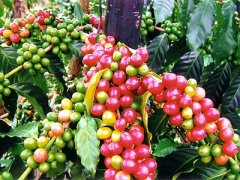
Introduction to Coffee beans-- Yunnan small Coffee Origin Yunnan Coffee characteristics Cloud
Origin: in 1892, French missionary Father Tian succeeded in growing coffee in a place called Zhukula in Yunnan. Up to now, there are still 24 coffee trees which are more than 90 years old in Zhukula Township. Zhu Kula is a mysterious, legendary and beautiful natural village, which belongs to the Zhukula Village Committee of Pingchuan Town, Binchuan County, Dali Prefecture. It is located on the banks of Yupao River, a tributary of the Jinsha River. It is a Dali Prefecture and Chuxiong.

Yunnan small grain coffee
Origin: in 1892, French missionary Father Tian succeeded in growing coffee in a place called Zhukula in Yunnan. Up to now, there are still 24 coffee trees which are more than 90 years old in Zhukula Township. Zhu Kula is a mysterious, legendary and beautiful natural village, which belongs to the Zhukula Village Committee of Pingchuan Town, Binchuan County, Dali Prefecture. It is located on the banks of Yupao River, a tributary of the Jinsha River. It is a Dali Prefecture and Chuxiong.
Coffee beans Yunnan Arabica coffee
Origin: In 1892, French missionary Father Tian tried to plant coffee successfully in a place called Zhu Kula in Yunnan Province. Up to now, there are still 24 coffee trees growing in Zhukula Township, which are more than 90 years old. Zhukula is a mysterious, legendary and beautiful natural village. It belongs to Zhukula Village Committee of Pingchuan Town, Binchuan County, Dali Prefecture. It is located on the bank of Yupao River, a tributary of Jinsha River. This is a Dali Prefecture and Chuxiong County.

Main components of Yunnan small Coffee Fruit
Origin: in 1892, French missionary Father Tian succeeded in growing coffee in a place called Zhukula in Yunnan. Up to now, there are still 24 coffee trees which are more than 90 years old in Zhukula Township. Zhu Kula is a mysterious, legendary and beautiful natural village, which belongs to the Zhukula Village Committee of Pingchuan Town, Binchuan County, Dali Prefecture. It is located on the banks of Yupao River, a tributary of the Jinsha River. It is a Dali Prefecture and Chuxiong.
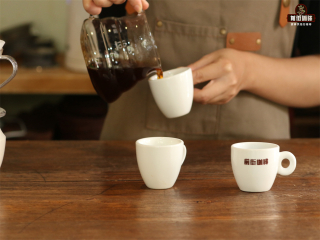
Yunnan coffee beans overall flavor taste grade How to Yunnan coffee cultivation varieties of the main characteristics of the introduction
Speaking of Yunnan coffee, its opening road and this period of history are related. In the middle of the 19th century, after France stabilized its influence in Indochina Peninsula, it began to look north to Yunnan with good mountains and good waters.After the Sino-French War ended, the Qing court was forced to open Mengzi in Yunnan as a trading port in October 1887, and French influence entered Yunnan. France Tian Deneng
How about Yunnan small beans? Yunnan adzuki bean coffee doesn't taste that bad.
Professional coffee knowledge exchange more coffee bean information please follow the coffee workshop (Wechat official account cafe_style) front street-Yunnan small grain coffee introduction Yunnan is the earliest coffee growing place in mainland China in 1884 coffee was first planted in Taiwan Province of China. In the mainland, the earliest coffee cultivation began in Yunnan. In 1892, Mr. Tian Deneng, a French missionary, for himself

The Origin of Yunnan small-grain Coffee
The origin of Yunnan small-grain coffee: in 1892, the French preacher Father Tian succeeded in experimenting with growing coffee in a place called Zhu Kula in Yunnan. To the city of Guzhu Kula, there are still 24 coffee trees with more than 90 years old. Zhu Kula is a mysterious, colorful and natural village, attached to the Zhukula Village Committee, Pingdi Town, Binchuan County, Dali Prefecture, located in the trunk of the Jinsha River.

A Vietnamese coffee brand Tim Aizun Shang Coffee opens its first coffee chain in the United States.
Professional coffee knowledge exchange more coffee bean information follow coffee workshop (Wechat official account cafe_style) June 2, several media reported that a Vietnamese coffee brand TNI King Coffee Coffee opened its first coffee chain in California, USA. It is understood that the coffee brand Tim Aizun's first coffee chain is located in an important position in Anaheim, California.
General knowledge of fine coffee detailed explanation of Yunnan small grain coffee
Origin: in 1892, French missionary Father Tian succeeded in growing coffee in a place called Zhukula in Yunnan. Up to now, there are still 24 coffee trees which are more than 90 years old in Zhukula Township. Zhu Kula is a mysterious, legendary and beautiful natural village, which belongs to the Zhukula Village Committee of Pingchuan Town, Binchuan County, Dali Prefecture. It is located on the banks of Yupao River, a tributary of the Jinsha River. It is a Dali Prefecture and Chuxiong.

General knowledge of Fine Coffee cultivation of small Coffee in Yunnan
The origin of Yunnan small-grain coffee: in 1892, the French preacher Father Tian succeeded in experimenting with growing coffee in a place called Zhu Kula in Yunnan. To the city of Guzhu Kula, there are still 24 coffee trees with more than 90 years old. Zhu Kula is a mysterious, colorful and natural village, attached to the Zhukula Village Committee, Pingdi Town, Binchuan County, Dali Prefecture, located in the trunk of the Jinsha River.

Yunnan small Coffee introduces the characteristics of Yunnan Coffee the taste and flavor of Yunnan boutique coffee
Yunnan small-grain coffee: Yunnan small-grain coffee, Rubiaceae, coffee genus, the planting area is mainly distributed in Lincang, Baoshan, Simao, Xishuangbanna, Dehong and other states. [1] small grains of coffee are native to Ethiopia or Arabian Peninsula. It is cultivated in Fujian, Guangdong, Hainan, Guangxi, Sichuan, Guizhou and Yunnan. The Origin of Yunnan small Coffee: in 1892, French missionary Father Tian

Is Yunnan small grain coffee delicious _ Yunnan small grain coffee origin _ Jippin coffee is this brand good?
Professional coffee knowledge exchange more coffee bean information please follow the coffee workshop (Wechat official account cafe_style) Yunnan Jiepin Coffee Company was established in January 2004. Is a coffee monopoly, with decades of coffee business history, long-term engaged in coffee border trade and domestic trade; has a greater advantage in coffee raw materials, operating a series of coffee products-raw materials are: Yunnan small grain coffee
Yunnan small Coffee introduces the characteristics of Yunnan Coffee the taste and flavor of Yunnan boutique coffee
Yunnan small-grain coffee: Yunnan small-grain coffee, Rubiaceae, coffee genus, the planting area is mainly distributed in Lincang, Baoshan, Simao, Xishuangbanna, Dehong and other states. [1] small grains of coffee are native to Ethiopia or Arabian Peninsula. It is cultivated in Fujian, Guangdong, Hainan, Guangxi, Sichuan, Guizhou and Yunnan. The Origin of Yunnan small Coffee: in 1892, French missionary Father Tian

Do you know Yunnan small grains of coffee? Let's get to know some of its development knowledge.
Yunnan small-grain coffee: Yunnan small-grain coffee, Rubiaceae, coffee genus, the planting area is mainly distributed in Lincang, Baoshan, Simao, Xishuangbanna, Dehong and other states. [1] small grains of coffee are native to Ethiopia or Arabian Peninsula. It is cultivated in Fujian, Guangdong, Hainan, Guangxi, Sichuan, Guizhou and Yunnan. The Origin of Yunnan small Coffee: in 1892, French missionary Father Tian

How is the quality of Yunnan coffee? can Yunnan learn from coffee? why is Yunnan coffee so sour?
Professional coffee knowledge exchange more coffee bean information Please follow the coffee workshop (Wechat official account cafe_style) in 1892, French missionary Father Tian Deneng preached in Binchuan, Dali. In order to drink coffee, he planted coffee trees in Zhukula Village, near the church in Binchuan County, and taught local villagers to grow and drink coffee. Up to now, trees still grow in Zhukula Township for more than 90 years.
Coffee Survival problem
Some people say that the world's coffee culture and coffee trade grew up on the world's aborigines and supported by indigenous people, while returning to the new Taiwan coffee, which is located in the coffee producing area of the original tribes, German coffee in Santimen Township, Pingtung, in just a few years, it has rushed into the market at a subtle speed, but it has also brought hidden worries.
The earliest coffee shop in Chongqing
Coffee is one of the three largest drinks in the world, which is drunk by people in almost every country and region. People in Chongqing know a little about coffee from foreigners at first, or occasionally in the upper hall of dignitaries. It is so well-known that even the general public can taste and enjoy the coffee in order to appreciate the color of the coffee.